Posts in Category: Technology
www.eyexconcom: Your Gateway To Technology Insights and Reviews
In this fast paced and developing world technology is one of the major things that everyone should be aware of and follow. With the increase in technology the lifestyle of the humans is changing and it is improving day to day. With the increase in online usage nowadays it has become easy for people to gain knowledge about various technologies and innovation. With platforms like www.eyeconcom it has become very easy to know more about tech insights. Today in our article we are going to discuss this online technology platform and its features. Let’s get into the article.
All About www.eyexconcom
www.eyexconcom is a technology based blog which delivers complete information and updates about latest technologies and innovations. All the information like advancement in various technologies, marketing and businesses will be mentioned and explained clearly on this platform. For tech enthusiasts this platform is one of the best sources to keep themselves updated with all the latest news and updates regarding technology and innovations.
With the in depth analysis and expert reviews this tech platform has gathered many people’s attention. The content provided and published on this platform is well written and reviewed by many industry experts. Product review is one of the best features of this platform. They will analyze the newly released product into the market and will write a genuine review which will help the readers who are willing to buy that product.
This platform had a variety of features which makes it stand out from other tech news and informative platforms. In this blog we have explained to you clearly why this blog is best for technology news and updates.
Why www.eyexconcom is The Best Tech Platform?
This platform covers almost all types of technology and business related news and updates that is why it is considered as one of the best online platforms for tech lovers. Below are various topics and categories that www.eyexconcom covers.
1. Technology
This category will cover all types of technologies like Artificial Intelligence, Robotics, Machine Learning, 5G Technology, Networking, Virtual Reality, Augmented Reality, Meta Verse, Software Development, Web designing and many more. All the latest releases will be mentioned in this category.
2. Business and World news
This part of the platform will cover all the business and marketing related news that is going around the world and various industries. All the trading and stock exchanges news and updates will be mentioned in this category. Business management, Financial management related articles will be there in this category
3. Social news
This category mainly concentrates on the communication related news and updates. This will cover all the social media applications like Facebook, Instagram, Twitter and Snapchat. Any update or issues regarding this social media platforms will be get noticed by the
www.eyexconcom.
4. Entrainment
Here they will mainly concentrate on the Film industry and sports. They will cover all the movie related news like new movie releases and celebrity news and updates. When coming to sports they will cover all the major sporting events and news like Cricket, football, badminton, basketball etc. players profiles will also be updated in this category.
5. PC & Consoles
In This category they will cover all the computer and mobile related news and updates. Here if any new laptop or mobile is released then the review of the device will be written by the experts. Any software updates or iOS related news and updates will also be covered in this category.
Final Say
With platforms like www.eyexconcom people can improve their knowledge on technology and innovation. In this high speed and rapid developing world people must be kept updated with all the technology news because they have to be adjusted with all the new innovations. Many business professionals can also rely on this platform and gain valuable insights on digitalization and business growth tips and strategies. Every reader can freely access this platform without taking any subscription. There will be regular updating of news and other technical information on this tech blog so that the readers can feel fresh and read the new information.
Community engagement option is also provided on this online platform. We can communicate with the other readers and share knowledge with them. This will allow us to know new things and make new friends who have the same interests.
What is Selenium: An In-Depth Look at Selenium and Its Ecosystem
Selenium is a well-known name for being the perfect framework for web application testing and development. It has a strong provision that automates interactions through browsers, ensuring that the functions maintain consortium behaviour across diverse platforms. What is selenium, and how is it essential in present-day software engineering?
Selenium is an open-source automating framework designed to emulate a user’s actions on web browsers while doing the task more effectively and accurately. Such activities involve form submission, button clicking, and layout validation. This blog on what is Selenium provides details on all aspects of Selenium, such as what is it, how it is used, and its advantages and disadvantages.
Defining Selenium and Its Core Functionality
The goal of Selenium is to automate repetitive testing of web applications. Today, it is a leading open-source framework that is now used by millions of developers and QA professionals around the world. Selenium is the browser-based interaction automation software that simulates user actions to validate performance in web applications across various environments.
How does Selenium help? Selenium provides a tool suite that enables developers to build scripts that control browsers, including Chrome, Firefox, and Safari. These scripts can check the functionality of buttons, forms, or even page rendering. Selenium will, in comparison, do all this validation on its own, way faster than a human would; this saves a lot of time. Its open-source foundation allows anybody to use and customize the system by backing an extensive developer network.
Selenium provides flexibility through its ability to operate with various developer languages such as Java, Python and C#. This allows for the augmentation of productivity. Organizations use Selenium to provide a perfect web experience to different sets of users. With the growing complexity of web applications, Selenium is becoming crucial in maintaining quality assurance standards and the operability of software development workflows.
Exploring the Selenium Ecosystem: Key Components
Selenium is an all-inclusive framework with many specialized components catering to varied automation testing requirements. Each component fulfills a specific technical need, so Selenium is fit to work in all kinds of testing scenarios. This section describes each constituent object in detail and its operational significance.
At the core of the ecosystem is Selenium WebDriver, a sophisticated interface for writing precise automation scripts. What is Selenium WebDriver? It is a browser-specific driver that directly controls the browser, which means Selenium WebDriver works without the proxy-based legacy techniques, thus affording high speed and reliability of execution in tests.
This is an advantage over the Selenium IDE. This user-friendly interface is meant for users with a rudimentary understanding of coding. It is a simple browser extension that allows users to perform recording and playback capabilities to generate reusable test scripts.
This particular framework is available for distributed test execution enhancements; hence, Selenium Grid enables tests to be run in a distributed manner. It allows parallel testing across different machines or browser instances, fast-tracking every process involved in testing life cycles by taking advantage of parallel processing. This is especially useful in validating the application’s behavior across various configurations, such as operating systems and browser versions.
The key strength of an open-source community is that it is always active, refining Selenium’s functionality with the latest technological developments and contending to keep most of its tools current with changing times.
Hence, Selenium’s components and features provide an end-to-end solution for individual developers with simple validating needs or enterprise-wide testing program support. Such architectural flexibility has guaranteed the framework’s continued popularity in web application testing.
Operational Mechanics of Selenium: A Technical Overview
While intricate, Selenium’s operational framework is logically structured for efficient automation. It acts as an intermediary between test scripts and web browsers, executing predefined commands. Scripts, authored in Python or Java, instruct browsers to perform actions like navigating pages or submitting data.
This process relies on browser-specific drivers, such as ChromeDriver or GeckoDriver for Firefox. These drivers establish a communication protocol between Selenium and the target browser, ensuring seamless command execution. What is Selenium WebDriver within this context? The core component directly interfaces with these drivers, replacing legacy methods with streamlined browser control.
Selenium excels at handling dynamic web content. It employs synchronization mechanisms to wait for elements before interaction, mitigating runtime errors. Configuration requires installing language bindings, browser drivers, and a development environment like Eclipse or IntelliJ IDEA. Once operational, Selenium executes scripts with precision, accurately emulating user interactions.
This architecture enables robust automation of repetitive tasks, enhancing testing scalability. Its technical design prioritizes flexibility, supporting diverse browser environments and complex workflows. Mastery of these mechanics equips practitioners to implement reliable, automated testing solutions tailored to specific application requirements.
Primary Applications of Selenium in Testing
Selenium’s technical versatility is a cornerstone for numerous web application testing scenarios. Its capacity to automate browser interactions supports a spectrum of validation activities. This section outlines its principal applications within quality assurance domains.
Functional testing is a primary application where Selenium verifies that application features operate correctly. For example, it can validate login workflows by simulating user inputs and checking subsequent responses. Regression testing is equally significant, ensuring that code modifications do not impair existing functionalities, with Selenium automating repetitive test suite executions.
Cross-browser compatibility testing leverages Selenium’s multi-browser support, confirming uniform application behavior across Chrome, Firefox, and Edge. It provides essential performance evaluations, like measuring page load time, but is otherwise not designed for performance testing. Selenium performs web scraping for testing web applications, an automated method of extracting data from a website, such as retrieving information formatted in tables. In this way, Selenium provides organizations, from e-commerce to content platforms, with an example of how it can make them deliver consistent, high-quality web experiences through systematic validation.
Technical Advantages of Selenium Framework
Selenium is known for its unique technical advantages, which cater to critical needs among its peers in the already established automation tools. This section explains how it is effective.
First, it’s open source and thus does not require a license fee. This allows easy access to all the features and participation in the vibrant community continuously created using it. It also supports several languages, such as Java, Python, or C#, to quickly adapt to existing development stacks without making the changeover awkward.
Providing support within many browsers, presenting compatibility checks from Chrome to Firefox and Safari, among others. The much-awaited Scalability of the Selenium Grid allows the parallel execution of the tests, reducing the overall period needed to conduct large-scale testing.
Integrating it with popular CI/CD pipelines like Jenkins or GitLab CI combines testing with agile workflows, improving application development efficiency. These technical advantages ensure speedier validation, fewer errors, and well-laid foundations for deploying reliable web applications, placing Selenium in a uniquely critical position in highly modern software engineering ecosystems.
Constraints and Limitations of Selenium
Despite its strengths, Selenium exhibits technical constraints that must be considered for optimal utilization. Recognizing these limitations ensures practical application within appropriate contexts. This section examines its primary shortcomings.
Selenium is exclusively designed for web application testing. It lacks support for desktop or native mobile application validation, requiring alternatives like Appium for such scenarios. The requirement for programming skills in Java or Python creates a hurdle for teams that lack expertise in coding languages.
Script maintenance presents ongoing challenges as evolving web applications demand frequent updates to test cases, increasing resource allocation. Selenium lacks native reporting functionalities, necessitating integration with external frameworks like TestNG or ExtentReports for comprehensive test analytics.
Its capacity for performance testing is limited, and it is suitable only for basic metrics rather than in-depth load or stress analysis, where tools like JMeter excel. These limitations highlight the need for complementary tools to address broader testing requirements, ensuring Selenium is deployed where its web-centric capabilities are most effective.
Enhancing Selenium with LambdaTest: Cloud-Based Testing Solutions
LambdaTest enhances Selenium by adding a strong cloud-based testing infrastructure for current automation requirements. Its Selenium Grid Cloud provides access to 5000+ browser combinations and real devices for parallel test execution across platforms like Windows, Linux, and macOS.
Such scalability ensures comprehensive compatibility testing across browsers, from Chrome to Safari and Firefox to Internet Explorer and Opera, and validation on mobile browsers on Android and iOS devices. What is Selenium in this context? It is the automation engine seamlessly integrated into LambdaTest’s advanced platform for end-to-end functionality verification.
The platform enhances debugging through real-time test analytics, delivering detailed reports with exception, command, network, and video logs via Hawkeye insights. This eliminates reliance on external reporting tools, streamlining issue resolution.
LambdaTest supports diverse automation frameworks, including Selenium, Appium, and Cypress, as well as languages like Java and Python, ensuring flexibility. Its enterprise-ready tunnel facilitates secure testing of locally hosted applications while built-in geolocation testing spans 250+ regions.
With over 120 integrations, including CI/CD and project management tools, LambdaTest effortlessly integrates into existing workflows. Users benefit from 24/7 support and next-gen AI features to receive dependable help and state-of-the-art testing solutions.
Conclusion
Selenium is a robust framework that encompasses WebDriver, IDE, and Grid. It automates web application testing with precision. It ensures quality through multi-browser compatibility and language support, though it is confined to web contexts and demands technical expertise. Its ecosystem excels in functional and regression testing, bolstered by scalability and CI/CD integration. As web technologies advance, Selenium evolves, promising sustained utility for practitioners, as it offers a reliable automation solution. Explore Selenium to enhance your testing efficiency—its technical prowess awaits.
Cloud Testing: Why Enterprises Are Shifting to Cloud-Based Infrastructure
Over the past few years, the cloud testing trend has picked up among software organizations. As cloud testing has various advantages over conventional methods, it is being widely adopted. Such advantages are scalability, cost savings, and faster deployment.
Organizations can also easily test applications on various environments without hardware or infrastructure costs through cloud computing resources. The above features prompted teams to work together more efficiently and speed up the development cycle so that products hit the market faster.
In this article, we will take a look at why enterprises are shifting towards cloud-based infrastructure.
Introduction to Cloud-Based Infrastructure
Cloud-based infrastructure is designed in particular to aid in software testing through the feature of accessing many live devices and simulated environments. The approach assists in reducing the cost of maintaining an in-house laboratory because organizations can provision their test infrastructure on-demand without incurring extra costs.
Cloud testing environments enable teams to set up resources dynamically based on their needs and test applications extensively in different configurations to enhance their reliability and performance. Organizations can effectively manage testing activities, make efficient use of resources, and accelerate the development process with the help of cloud computing facilities.
Why are Non-Cloud-Based Infrastructures Redundant and Outdated?
Non-cloud infrastructure, particularly on-premises deployment, is quickly being made old and irrelevant due to some limitations. The first of these significant reasons is the heavy up-front cost of acquiring and retaining hardware, software, and physical space, which is too heavy a burden for most organizations to bear.
Besides, on-premise infrastructure is non-scalable in that large-scale investments in hardware and resources would be needed to build capacity, taking time and expenses. Maintenance, as well as the need for upgrades also lies squarely on the enterprise, using time and valuable IT resources.
In addition, on-premises solutions are opposed to remote access and collaboration, deterring flexibility and responsiveness in the modern, rapid digital economy. Cloud infrastructure, however, is scalable, cost-effective, and offers longer collaboration features, thus a more viable solution for modern enterprises.
Need for Cloud-Based Infrastructure
Cloud infrastructure needs are a result of the evolving needs of modern-day enterprises. On-premises traditional infrastructure is coupled with huge upfront capital costs in hardware, software, and maintenance, rendering it unaffordable to the majority of organizations.
Cloud infrastructure is a pay-as-you-go approach under which the needs can be amplified or scaled back as and when required without wasting resources. This is especially crucial for organizations that intend to transform rapidly according to altering market forces along with technological advances.
Cloud computing also presents improved technologies such as Machine Learning (ML) as well as AI to support organizations to innovate faster and to move applications promptly.
Importance of Cloud-Based Infrastructure
Cloud infrastructure matters since it provides organizations with scalability, flexibility, and reliability. Cloud computing resources make companies leverage high-performance computing without purchasing expensive hardware, yet enjoy low expenses and overall performance. Enterprise continuity is also achieved in cloud infrastructure using high availability and redundancy components with minimal downtime during outages.
Also, cloud providers spend a considerable amount of money on security, which provides robust capabilities that help ensure sensitive information remains secure and complies with international guidelines.
Benefits of Cloud Testing
Here are the most important advantages of using cloud testing:
- Scalability and Flexibility: Cloud platforms are highly adaptable, allowing organizations to scale testing resources according to project needs. Scalability is necessary to cater to peak testing demands or test new test cases without the need to over-invest in resources.
- Cost-Effectiveness: Cloud testing avoids capital expenditure on buying and operating hardware and software infrastructure. Organizations only need to pay for consumed resources, and thus, it is an economical solution.
- Faster Deployment: Cloud computing provides fast provisioning of testing environments, reducing the time taken to install and begin testing. This accelerates the development process, enabling organizations to place products in the market faster.
- Enhanced Collaboration: Cloud testing provides a shared platform where Quality Assurance (QA) and development teams can work together on testing tasks regardless of their geographical location.
Types of Cloud Testing
Cloud testing encompasses various types of testing, including:
- Performance Testing: This is a verification of how responsive, scalable, and reliable an application is under different loads and conditions, hence the name Performance Testing. This is useful in determining the bottlenecks and whether the application can operate under high traffic without performance loss.
- Security Testing: Security testing is needed to make applications secure and industry-standard compliant. It is the process of finding and closing the probable security loopholes which are vulnerable to malicious attacks.
- Load Testing: Load testing simulates high traffic to see how applications respond to pressure. Load testing identifies the breaking point of an application and identifies problems that can arise when it is heavily used.
- System Testing: System testing is done by testing the application end-to-end to ensure that all the components communicate with one another as anticipated. This testing integrates different modules and offers end-to-end functionality and dependability on the cloud platform.
- Interoperability Testing: Interoperability testing makes sure that an application can communicate freely with other services and systems. This kind of testing is pretty significant for applications that are dependent on third-party services or external Application Programming Interfaces (APIs).
- Availability Testing: Availability testing guarantees that an application is always available with fewer downtimes when infrastructure is upgraded or restarted by the cloud provider.
- Disaster Recovery Testing : This test ensures no critical information is ever lost during downtime or memory losses, thus ensuring business continuity.
Challenges in Cloud Testing
Cloud testing, while useful, also has a few challenges:
- Data Privacy Issues: It is vitally important to secure data security and privacy when using cloud computing and testing. Organizations should ensure that they have strong security measures in place to safeguard users’ private data.
- Vendor Lock-In: In order to prevent dependence on a single cloud provider, organizations need also choose their providers carefully. This prevents lock-in to the features and offerings of a single provider and guarantees flexibility.
- Compliance Issues: Compliance requirements to be maintained are another problem. Cloud testing needs to adhere to various compliance standards that are complex and time-consuming to manage.
- Data Privacy Issues: Data security and privacy need to be protected while using cloud computing techniques. Organizations need to have robust security controls in place to maintain the sensitive data of the users.
Best Practices for Cloud Testing
The following are some best practices for practicing cloud testing effectively:
- Select the Right Cloud Provider: Select a provider that is scalable, secure, and compliant. Ensure the provider meets your organization’s requirements and regulatory requirements.
- Implement Strong Security Controls: Protect data privacy and security through encryption, access control, and periodic security audits.
- Optimize Resource Management: Maximize the usage of cloud resources to avoid wasteful spending. Monitor utilization and redistribute resources based on test demands to reduce costs.
- Regular System Updates and Patching: Keep cloud environments updated with the latest security patches and software upgrades to close vulnerabilities.
Tools and Frameworks for Cloud Testing
Certain cloud tools have strong testing capabilities like load testing, security testing, and performance monitoring. Although the Microsoft Azure, AWS, and Google Cloud platforms have adequate tools for cloud testing, open-source tools may also be integrated into cloud infrastructure to deliver more testing capabilities.
For instance, Selenium is an open-source web application automation testing tool that supports cross-browser testing across all browsers and seamless integration with cloud infrastructure for distributed testing.
Other than that, Apache JMeter is open-source and free software that can be utilized to conduct load and performance testing with the additional functionality of creating an overload on a server for testing the robustness of the server and checking overall performance under different conditions. These are free, open-source tools that are cheap and can be flexible, i.e., they can be a value for any organization seeking to improve its cloud testing process.
Platforms for Cloud Testing
For cloud mobile testing, platforms like LambdaTest have the capability of easily scaling up testing operations. LambdaTest is an AI-native test execution platform that allows you to run manual and automation tests on scale across 5000+ browsers and OS combinations. It also supports a massive list of browsers and mobile platforms, making the testers able to simply decide the cross-browser compatibility and perform responsive testing.
With real-time testing across various screen sizes, LambdaTest enables web applications to deliver a seamless user experience. It also supports automation frameworks like Selenium very well, offering features like parallel execution for extensive cross-platform testing.
The platform also supports automated testing of mobile applications on a scalable real-device cloud using frameworks like Appium.
Along with that LambdaTest also gives access to geolocation testing and visual regression testing as well, making it a very strong platform to ensure that apps run smoothly across all devices and environments.
Why are Enterprises Shifting to Cloud-Based Infrastructure?
Organizations are shifting to the cloud infrastructure with every passing day due to its tons of benefits over traditional and on-site infrastructures. Cost saving is one of the primary reasons; cloud infrastructure saves the upfront capital expenses on hardware and software, instead offering a pay-as-you-consume paradigm in which enterprises only pay for what they use.
Moreover, cloud infrastructure provides unprecedented scalability and flexibility in such a way that firms can respond easily to changing demands without the confines of hardware infrastructure. The security and reliability offered by cloud providers should be a serious consideration of users.
In addition to that, cloud infrastructure facilitates innovation by using new technologies and rapid deployment of applications. This development is essential to stay competitive in the fast-evolving digital age.
Future of Cloud-Based Infrastructure
The future for cloud infrastructure looks bright with newer trends and technology to propel it. Cloud computing will be all the more pervasive by the end of 2025 as an innovation platform both in terms of technology and enterprise growth in general.
Top trends are increasing the adoption of multi-cloud strategies by enabling organizations to utilize various providers’ services to enable greater agility, risk of avoidance of lock-in, and resiliency.
There will be increased use of AI and ML in cloud offerings to allow companies to process a huge amount of data in real time and make faster decisions.
The growth in the utilization of edge computing and serverless computing will also make an important contribution, improving data processing efficiency and reducing infrastructure management overheads. Sustainability would also be a high priority, with cloud vendors targeting energy-efficient data centers and open carbon accounting to cope with growing environmental agendas.
Conclusion
In conclusion, cloud testing is an essential method for organizations that want to improve their software development process. With scalability, cost savings, and increased rates of deployment, cloud testing renders organizations competitive in the fast-paced digital era.
With additional cloud-based applications looming on the horizon, embracing cloud testing will be a significant choice for organizations wanting to simplify their testing process and improve software quality.
Cloud Mobile Testing: Strategies for Optimizing Mobile Tests in the Cloud
We can consider cloud mobile testing to be one of the highly known methods for checking the quality as well as the performance of the applications in this digital era.
It is extremely tough for organizations to test their apps in different situations without the proper availability of cloud testing techniques, as the number of different mobile devices and Operating Systems (OSs) keeps increasing.
By giving developers and testers access to several devices and configurations, cloud-based testing platforms provide an on-demand, adaptable, and cost-effective means of overcoming this difficulty.
In this article, we will deeply look into strategies for optimizing mobile tests in the cloud:
Introduction to Cloud Mobile Testing
Mobile applications are now a part of modern living, and their success is based on offering a simple User Experience (UX) across different devices and platforms. The fact that mobile ecosystems have numerous device models and OSs increases testing complexity.
Due to their lack of resources and inability to scale, older testing methods typically fail. This is where cloud mobile testing comes in, offering a practical solution that ensures comprehensive testing without the need for physical devices by simulating real-world testing situations using cloud infrastructures.
Benefits of Cloud Mobile Testing
The key benefits of adopting cloud mobile testing are as follows:
Scalability and Flexibility
Cloud infrastructures make it possible for organizations to scale test resources up or down as per project demands for efficient usage of resources and alignment with agile development practices.
Access to a Wide Range of Devices
Cloud testing provides the facility of utilizing a big pool of available devices, thereby enabling complete compatibility testing across OS versions and families of devices.
Cost Efficiency
By reducing the need for physical infrastructure, cloud testing is an affordable method of testing a mobile app.
Strategies for Effective Cloud-Based Mobile App Testing
The following are the strategies for effective cloud-based mobile app testing;
Selecting the Right Testing Tools
The right choice of testing tools is fundamental to successful cloud-based testing. When choosing platforms, consider the following factors:
The platform should offer access to a wide array of real devices, e.g., various versions and models of operating systems. This is essential for extensive compatibility testing. In addition, seek platforms that are compatible with the most popular automation frameworks, such as Appium, Selenium, and XCTest.
These frameworks facilitate efficient automation of regression and repetitive tests. For automating the testing procedures, the frameworks should also be easily integrated with existing tools and systems, including Continuous Integration and Continuous Delivery (CI/CD) pipelines.
Lastly, choose the tools that possess user-friendly interfaces and robust documentation support so that it is still easy and has a low learning curve.
Automating Test Processes
Automation is a significant contributor to optimal efficiency with cloud-based testing. Utilize regression and repetitive test automation to minimize time and error by humans. Leverage frameworks like Appium and Selenium for such test automation, which also cuts down the number of test cycles and ensures increased reliability. Adopting automated testing in CI/CD pipelines provides continuous verification of code changes with immediate feedback regarding new code effects.
Implementing Continuous Testing
Periodic testing is critical to guarantee the quality and trustworthiness of mobile apps. Implement testing within the CI/CD pipeline to verify each code change in real-time, giving immediate feedback against issues.
Continuous testing is aligned with agile development techniques that allow for quick iteration and tuning against feedback. Continuous testing ensures issues get detected and addressed early on in the development phase. This process lowers the overall development time and improves product quality.
Ensuring Security and Compliance
Security and compliance are also very important features of cloud-based testing. Make sure that the test environment has strong security features like encryption, secure data storage, and access controls to safeguard sensitive app data and code.
Also, make sure that all the test procedures are in line with organizational security procedures and data privacy laws. This includes performing frequent audits and having open data-handling processes.
Maximizing Device Coverage
Leverage cloud platforms to retrieve huge numbers of real devices and test across varied OS versions and devices. It aids in uncovering compatibility problems early and assures that the app functions adequately on various devices.
Implementing Parallel Testing
Leverage cloud infrastructure to execute tests in parallel across various devices, decreasing total test time and boosting efficiency by a substantial percentage. Parallel testing allows organizations to execute various scenarios concurrently, speeding up testing without the need to sacrifice quality.
Collaboration and Feedback
Encourage collaboration among developers and testers to correct significant failures in good time and improve the testing process step by step. Beta test with target groups to gather usability feedback and improve the user experience even more. The feedback loop allows the app’s functionality and performance to be improved to meet users’ expectations.
Effective Approaches to Cloud-Based Testing
Organizations can put some effective measures in place for cloud-based testing that make it more efficient, scalable, and reliable. Here is a more general overview of these measures:
Maximizing Device Coverage
Optimizing the coverage of devices is required to make sure mobile apps perform well on various devices and operating systems. Cloud infrastructure offers access to a large group of real devices, through which end-to-end testing across varied OS versions and devices can be facilitated.
This method ensures that compatibility problems get identified early and that the app provides an optimal user experience on various platforms. Using cloud-based device farms, organizations can test on numerous devices at once without having to own physical infrastructure, saving money and increasing scalability.
Integrating Automated Testing
The integration of automated testing and cloud-based testing is critical in realizing maximum efficiency. Automation frameworks provide continuous automated testing across many devices, increasing feedback loops and defect fixes. Automating regression and repetitive testing allows teams to concentrate on advanced testing scenarios, delivering high-quality software promptly.
Popular automation frameworks such as Appium and Selenium are commonly used for web and mobile application testing and can be utilized with cloud platforms for automating testing procedures.
Implementing Parallel Testing
Parallel testing is a very effective method for decreasing testing time. Cloud-based infrastructure enables parallel execution of tests on devices with ease, significantly increasing efficiency and accelerating the test cycle.
Parallel testing allows several test scenarios to be run simultaneously, thereby accelerating the test cycle without ever compromising quality. With parallel testing, teams can find and correct defects at warp speed, releasing their apps much faster.
Simulating Geolocation Scenarios
Geolocation simulation scenarios are essential to ensure mobile applications run seamlessly across different geographical areas. Cloud testing platforms allow the simulation of diverse location-based situations, and the developers can check how the applications behave across different environments. This ensures early identification of location-specific issues, and the application is free of glitches regardless of the user’s location.
Planning Your Testing Approach
Creating a complete test plan is essential to cloud mobile testing. This requires formulating clear goals, scope, testing process, and documentation template. The test plan should depict clear processes, work, deliverables, duties and responsibilities, and schedules. Properly planned testing allows everybody who is concerned to align with each other, resources are adequately utilized, and the testing activity takes place effortlessly.
Best Practices for Cloud Mobile App Testing
The best practices to be implemented to provide optimal cloud mobile app testing are as follows:
Use Load Testing Tools
Ensure load testing tools are appropriate for your app structure, upload/download speed, and bandwidth simulation consideration. This is useful in performance bottleneck detection and making the app resilient to withstand anticipated loads without UX compromise. Load testing tools must be balanced in terms of whether they can effectively simulate realistic conditions.
Test Both Inside and Outside the Firewall
Conduct testing under various scenarios to identify performance bottlenecks. Testing inside and outside the firewall allows the app to function as required in various network environments so that security defects and performance defects can be identified early in the development cycle. This allows the app to be secure and perform well under a range of network conditions.
Leveraging Open-Source Tools and Platforms for Enhanced Testing Efficiency
Besides cloud platforms, testing efficiency can also be improved through the use of open-source software. Automation reduces the need for manual testing and speeds up the process with tools like Appium, Robotium, and Selendroid. These tools provide flexible and cost-effective solutions for mobile application testing across various environments.
Appium, an open-source automation tool, supports testing for Android and iOS native, hybrid, and mobile web applications. It allows test case execution in multiple programming languages, making it a versatile choice for mobile application testing. Robotium is widely used for testing Android applications, providing a straightforward approach to writing test cases for different activities within an app. Similarly, Selendroid integrates with Selenium to enable automated testing for Android applications.
While open-source tools play a crucial role in mobile testing, executing tests efficiently at scale remains a challenge. Cloud-based platforms help overcome this limitation by providing scalable infrastructure without the need for extensive physical resources. One such solution is LambdaTest, an AI-native test execution platform that enables manual and automated testing across 5000+ browser and OS combinations.
LambdaTest enhances automation efforts by providing cloud-based real-device testing, reducing infrastructure costs, and allowing teams to run large-scale tests in parallel. It also incorporates AI in testing using tools like KaneAI, a GenAI-native testing agent that helps teams plan, author, and evolve test cases using natural language.
KaneAI seamlessly integrates with LambdaTest’s broader suite for test planning, execution, orchestration, and analysis, making it a valuable addition to high-speed quality engineering teams.
By combining open-source tools with scalable cloud-based solutions like LambdaTest, organizations can build an end-to-end testing ecosystem that ensures complete test coverage, accelerates feedback loops, and improves the overall quality of mobile applications.
Conclusion
Lastly, cloud mobile testing is the right strategy to help enhance mobile app testing for scalability, flexibility, and cost-effectiveness. Embracing practices like automation, continuous testing, and optimal best device coverage will help to ensure that organizations can achieve the goal of delivering their mobile applications with flawless customer experience on varying devices and OSs.
For the ever-evolving mobile applications landscape, cloud testing will continue to be vital to secure competitive positioning as well as customer satisfaction.
AI and ML in Edge Computing: The Next Big Revolution
By lowering latency, improving real-time decision-making, and putting processing capacity closer to data sources, edge computing is quickly changing the digital world. Innovation across a variety of sectors, including healthcare, manufacturing, finance, and Internet of Things applications, is being fueled by the incorporation of Artificial Intelligence (AI) and Machine Learning (ML) into edge computing. Companies are using AI-driven insights at the edge to boost productivity, cut expenses, and enhance performance. Enrolling in an AI and ML course gives professionals the know-how to successfully use this technological transition and stay ahead of the curve in this changing environment.
Introduction
AI and ML have traditionally been associated with cloud-based computing due to the massive data processing power required. However, with advancements in hardware, AI and ML models are now being deployed closer to the edge—directly on IoT devices, sensors, and embedded systems. This shift reduces dependency on centralized cloud computing, enabling faster processing and immediate responses.
Among the main advantages of AI and ML in edge computing are:
- Decision-Making in Real Time: Edge AI makes it possible to analyze data instantly, which is essential for sectors like healthcare (remote patient monitoring) and automotive (autonomous driving).
- Decreased Latency: By processing data at the edge, delays are reduced, which enhances user experiences in applications like gaming and smart homes.
- Enhanced Security: Localized data processing improves privacy and reduces vulnerability to outside attacks.
- Bandwidth Optimization: Reducing dependency on the cloud lowers bandwidth expenditures and network congestion.
Businesses and professionals need to understand these capabilities to remain competitive. An AI and ML course equips learners with hands-on skills in deploying machine learning models on edge devices.
Key Applications of AI and ML in Edge Computing
The convergence of AI and ML with edge computing is creating groundbreaking solutions across various sectors:
1. Healthcare
Real-time health monitoring and diagnostics are made possible by AI-powered edge computing, which improves patient care.
- For instance, wearable technology equipped with AI algorithms can identify irregular heartbeats and anticipate possible cardiac problems, promptly notifying medical professionals.
2. Manufacturing and Industrial Automation
Predictive maintenance and automation are revolutionizing the industrial sector.
- Example: AI-driven sensors in manufacturing plants analyze machinery performance and predict potential failures before they happen, reducing downtime.
3. Smart Cities and IoT
AI at the edge is optimizing energy consumption, traffic management, and public safety.
- Example: AI-driven traffic cameras adjust signal timings based on real-time congestion levels, reducing urban traffic jams.
4. Retail and Customer Experience
Retail businesses leverage edge AI to enhance in-store experiences.
- Example: AI-powered cameras analyze customer behavior, helping businesses personalize product placements and promotions.
5. Autonomous Vehicles
Self-driving cars rely on AI at the edge to process sensor data instantly.
- Example: Tesla’s Full Self-Driving (FSD) system utilizes edge AI for obstacle detection, lane tracking, and automated navigation.
Challenges and Solutions in AI and ML-Powered Edge Computing
Despite its benefits, implementing AI and ML in edge computing comes with its set of challenges:
1. Computational Constraints
Edge devices have limited processing power compared to cloud servers.
- Solution: Optimized ML models like TinyML allow AI to run efficiently on low-power edge devices.
2. Data Privacy Concerns
Handling sensitive information at the edge requires stringent security measures.
- Solution: AI-driven encryption and federated learning techniques help secure decentralized data processing.
3. Integration Complexity
Merging AI/ML capabilities with existing edge infrastructure can be complex.
- Solution: Platforms like NVIDIA Jetson and Google Edge TPU simplify AI deployment on edge devices.
4. Cost of Implementation
Deploying AI models on edge devices can be expensive.
- Solution: Open-source AI frameworks like TensorFlow Lite and PyTorch Mobile reduce development costs.
The Future of AI, ML, and Edge Computing
As industries increasingly adopt AI at the edge, we can expect:
- 5G Acceleration: High-speed networks will enhance edge AI capabilities, making real-time processing even faster.
- Advancements in AI Hardware: Chips optimized for edge AI (e.g., Apple’s Neural Engine) will make devices more efficient.
- Decentralized AI Models: Federated learning will allow multiple edge devices to learn collaboratively without centralized data storage.
- Greater Adoption in Consumer Tech: AI-enabled smart appliances, wearables, and home assistants will become more prevalent.
Professionals aiming to capitalize on these trends can gain hands-on expertise through an AI ML Bootcamp, which provides training in real-world AI applications and deployment strategies.
Conclusion
Edge computing’s AI and ML are transforming entire industries by enabling real-time analytics, boosting productivity, and enhancing user experiences. In a number of sectors, such as manufacturing, healthcare, smart cities, and autonomous systems, edge AI is driving digital transformation. However, in order to keep up with these advancements, professionals need to improve their abilities. An AI ML Bootcamp equips students with the essential skills they need to implement AI-driven solutions, preparing them for the future in a world that is becoming more and more AI-centric. As edge computing and artificial intelligence continue to develop, those who embrace this shift will be the ones spearheading the next wave of innovation in their own industries.
5 Ways to Analyze Cryptocurrency Prices to Make Informed Investment Decisions
The future of digital assets was once again a topic of discussion as Bitcoin soared beyond $50,000 in early 2025. When making selections, investors who were previously hesitant are now searching for trustworthy methods to assess cryptocurrency prices. Knowing how to evaluate price changes will help you trade the market more skillfully, regardless of your level of experience. These are five crucial techniques for evaluating cryptocurrency prices and choosing wisely.
Examine market trends and historical information
Despite the extreme volatility of cryptocurrency prices, patterns can frequently be seen in historical trends. Analyzing previous bull and bear markets aids in predicting future price changes. Bitcoin, for example, has typically experienced price spikes throughout a four-year cycle linked to its halving occurrences. You can find possible buying and selling opportunities by looking at price charts, previous corrections, and seasonal tendencies.
Second, examine market liquidity and trading volume
The price by itself does not provide the whole picture. In contrast to low volume, which could signal poor demand or possible price manipulation, high trading volume frequently shows great interest in a cryptocurrency. Verifying liquidity is also crucial since smooth trade in liquid marketplaces lowers the possibility of price slippage. It is a risky investment if you see a price increase but no trade activity, as this could indicate false inflation.
Assess on-chain measures
It is possible to examine cryptocurrency prices using the transparent data that blockchain technology delivers. Network hash rates, transaction volume, and active wallet addresses are a few examples of metrics that provide information on a coin’s security and adoption. For example, a high level of network activity, such as a rise in decentralized financing (DeFi) transactions, is frequently associated with a higher price for Ethereum. The price movement is probably supported by actual demand if fundamental measures indicate high user engagement.
Keep an eye on news impact and market sentiment
A major factor influencing cryptocurrency prices is public opinion. Significant price fluctuations can be brought on by institutional investments, regulatory changes, and even tweets from well-known individuals. The price of Bitcoin soared in 2021 when Tesla declared that it would be buying it, but it later fell when the corporation changed its mind. Analyzing investor conversations, social media sentiment, and news sources might assist you determine the market’s attitude before acting.
Make use of technical indicators to forecast prices
Analyzing price charts and utilizing indicators to forecast future changes is known as technical analysis. Well-known instruments such as the Relative Strength Index (RSI) can indicate whether a cryptocurrency is oversold or overbought. While resistance and support levels suggest possible places of price reversal, moving averages aid in identifying long-term trends. Combining several indicators can help you move away from speculation and toward a data-driven trading strategy.
How to invest in cryptocurrencies more wisely
Although there are many variables that affect cryptocurrency prices, careful data analysis can help you make better decisions. Using technical indicators, measuring sentiment, analyzing blockchain data, tracking trading volume, and researching past trends are all components of a well-rounded investment plan. Rather than responding to hype, make investments based on data and analysis. In the dynamic cryptocurrency market, this strategy enables you to reduce risks and seize genuine possibilities.
5 Best Free Video Converter Ultimate: Convert and Edit Video for PC
Video material has become an essential element of our everyday lives in the digital age. The need for quick video converters has never been stronger, whether it’s for sharing moments on social media or making professional presentations. Fortunately, there are various free video converter software available that not only allow you to convert videos but also provide advanced editing options. The top 5 free video converter software programs for PC users will be discussed in this article.
Is Any Video Converter Free and Safe?
While there are various free video Converters are available, such as well-known options like Handbrake, Freemake, and a range of online alternatives, it’s critical to be aware of the potential negatives that may be connected with using these tools. It’s critical to realize that, despite their ease of use and widespread appeal, some free video converters may have specific disadvantages or threats that consumers should be aware of before selecting. Making a better educated choice when choosing a video converter tool can therefore be facilitated by using care and having a thorough understanding of any potential drawbacks. Here are some common disadvantages of these video converters:
Limited Features: Free video converters often come with basic features. They may lack advanced editing options, file format support, or the ability to handle high-quality video conversions.
Watermarks: Some free converters may add watermarks to the converted videos, which can be undesirable if you’re looking for a professional and clean output.
Speed and Performance: Free converters might not be as fast or efficient as their premium counterparts. Processing times could be longer, especially for larger or high-definition files.
Limited Format Support: While many free converters cover common formats, they might not support less common or proprietary formats, limiting their versatility.
Ads and Bundled Software: Free software often includes advertisements or additional bundled software during installation. Users need to be cautious and opt-out of these extras to avoid potential security risks.
Privacy Concerns: Some free converters may collect user data or include ad trackers. It’s essential to review the privacy policy and terms of use before using such tools.
While free video converters can be useful for basic needs, users should carefully consider their requirements and potential drawbacks before making a choice. If advanced features, faster performance, and a seamless experience are essential, investing in a premium video converter might be a worthwhile option.
5 Best Free Video Converter Ultimate
1. Eassiy Video Converter Ultimate
Best For: Vloggers, Photographers, Video Makers
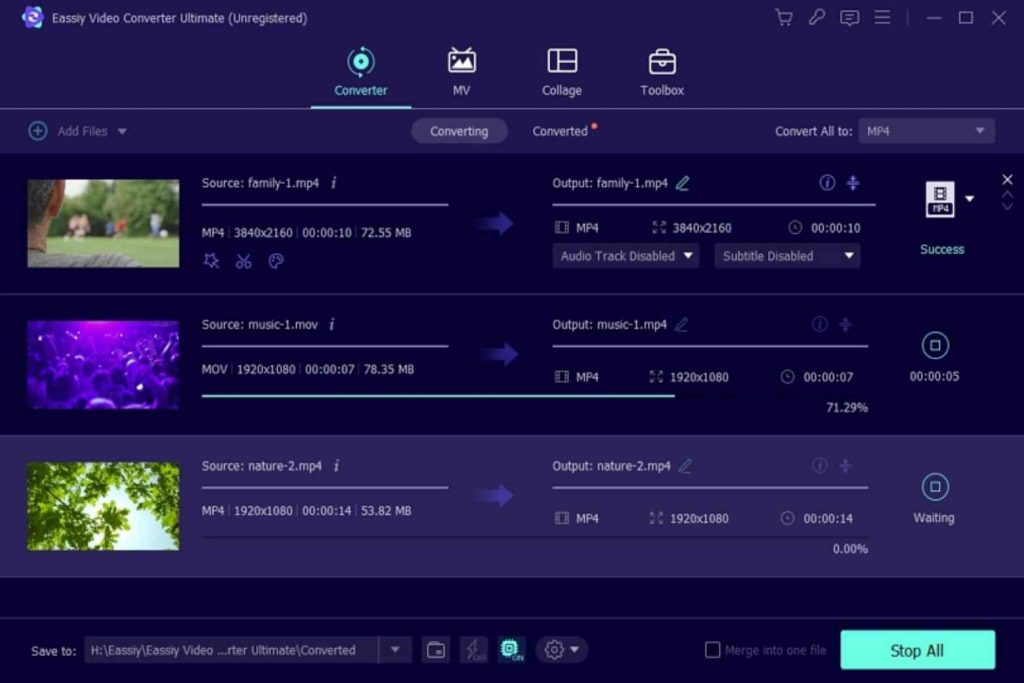
Eassiy Video Converter Ultimate, is a powerful and free video conversion software that is compatible with both Windows and Mac operating systems. With 1000+ supported video/audio formats, including well-liked options like MP4, MOV, and AVI, this adaptable application is the perfect choice for smooth video conversion. It uses lossless conversion technology to preserve the original video quality, ensuring a high-quality output. The user-friendly interface caters to both novice and experienced users.
Key Features:
- Effortlessly convert multiple videos in batch mode with a single click, streamlining the conversion process.
- Enjoy compatibility with 1000+ video/audio formats, ensuring versatility across a broad range of devices.
- Experience a remarkable 60x faster video conversion speed, thanks to GPU acceleration and multi-core processor optimization.
- Convert HD/4K/5K/8K videos seamlessly without compromising on quality, meeting the demands of high-resolution content.
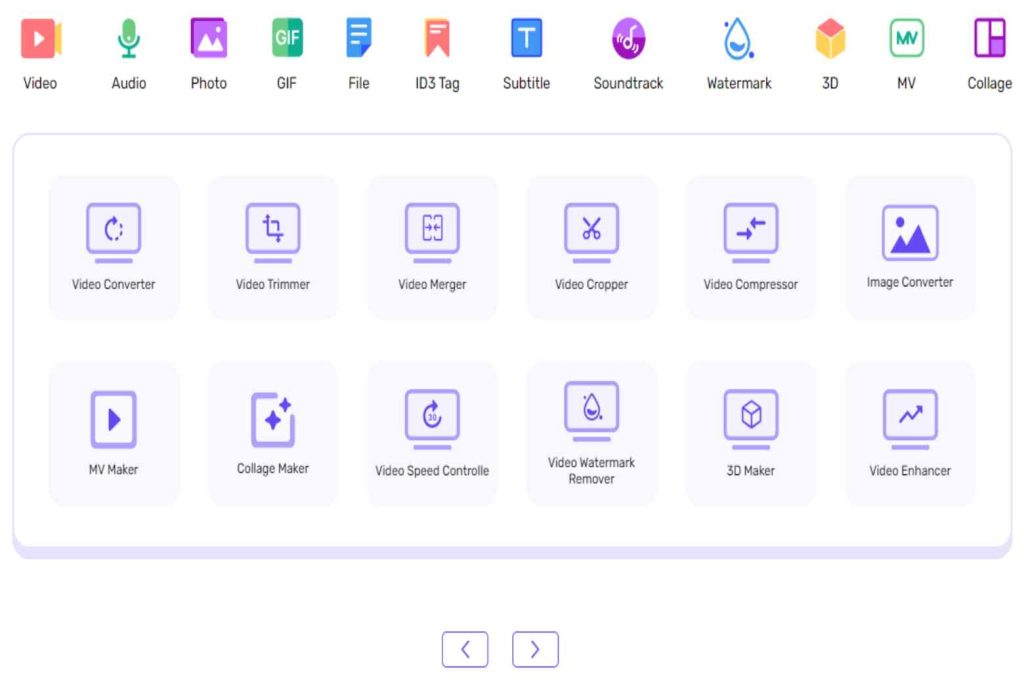
- Benefit from an all-in-one editor allowing you to trim, cut, merge, crop, rotate videos, add subtitles, watermarks, effects, adjust video speed, soundtracks, and more.
- Efficiently compress HD videos up to 8K resolution without sacrificing video quality. Simplify the process by compressing multiple videos in a batch with just one click.
Pros:
- Utilizing GPU acceleration and multi-core processor optimization, achieve an impressive 60X faster conversion speed, reducing time for converting large video files.
- With support for over 500 video formats, Eassiy Video Converter Ultimate caters to users with diverse needs, ensuring compatibility for various devices and platforms.
Expert Advice:
Eassiy Video Converter Ultimate is a strong application for those in search of a quick and efficient solution for video conversion jobs. Its incorporation of sophisticated editing capabilities and comprehensive format compatibility increases its appeal, making it potentially important for multimedia fans and pros. While it appears to be promising, individual preferences and certain use cases may have an impact on the actual effectiveness and user experience. We recommend investigating the software’s trial version or reading reviews to determine its fit for your individual needs.
2. HandBrake
Best For: A versatile and open-source software ideal for users seeking a free tool capable of converting multimedia files across various formats.
HandBrake, initially developed for DVD ripping, has transformed into a powerful video transcoder supporting a broad spectrum of multimedia formats. It is compatible with Windows, macOS, and Linux.
Key Features:
- HandBrake accommodates a range of input formats, offering conversions to popular outputs like MP4 and MKV.
- Users can fine-tune video quality through settings such as codec, frame rate, and bit rate.
- The software enables the queueing of multiple conversions for efficient batch processing.
- HandBrake supports the inclusion of subtitles and chapter markers in videos.
Pre-configured presets cater to specific devices or platforms, simplifying the conversion process.
Pros:
- As open-source software, HandBrake is free to use, with an active community continuously enhancing its features.
- Available on Windows, macOS, and Linux, HandBrake is accessible to a wide user base.
- Users with video encoding expertise can leverage advanced settings for more precise output control.
Expert Advice:
- HandBrake’s comprehensive documentation, available on its official website, provides valuable insights for optimal usage.
- Utilize the software’s presets for different devices and platforms to determine the best settings for specific needs.
- Regularly updating HandBrake ensures access to the latest features, bug fixes, and improvements.
3. Freemake Video Converter
Best For: Ideal for users seeking a straightforward video conversion tool with a user-friendly interface.
Freemake Video Converter is a free, easy-to-use software designed for converting videos between various formats. It supports a wide range of input and output formats and offers basic video editing features like trimming and rotating.
Key Features:
- Supports popular formats like MP4, AVI, and MKV.
- User-friendly interface for easy navigation.
- Includes features for cutting, trimming, and rotating videos.
- Allows simultaneous conversion of multiple files.
- Offers the capability to burn videos to DVD.
Pros:
- No cost for basic video conversion needs.
- Intuitive interface suitable for users of varying technical expertise.
- Known for relatively quick video conversion processes.
Expert Tips:
- Check for software updates to benefit from performance improvements and new features.
- During installation, opt-out of any extra tools or software offered.
- Consider other video conversion tools in the market based on your specific needs and preferences.
4. Movavi Video Converter
Best For: Ideal for users seeking an intuitive video conversion tool with user-friendly features, suitable for both individuals and professionals.
Movavi Video Converter is a versatile software designed for converting video and audio files into various formats. It offers an intuitive interface and includes basic video editing features.
Key Features:
- Wide format support for both input and output.
- Device presets for popular platforms.
- Basic video editing tools.
- Efficient batch conversion.
- High-speed conversion.
Pros:
- User-friendly interface.
- Versatility in format compatibility.
- Fast conversion speed.
- Additional features like basic video editing.
Expert Advice:
- Keep the software updated for the latest features.
- Explore built-in editing tools for added versatility.
- Utilize device presets for efficient conversion tailored to specific playback devices.
Also Read: Avoid Falling For PC Rip-Offs & Easy Fix Services
5. Prism Video Converter
Best For: Effortless video file conversion between various formats, catering to users of all technical levels.
Prism Video Converter streamlines the process of converting video files, ensuring compatibility, reducing file size, and preparing content for specific devices. Its user-friendly design makes it accessible to both beginners and experienced users.
Key Features:
- Supports a wide array of video formats for seamless conversion.
- Enables simultaneous conversion of multiple files for time efficiency.
- Adjustable settings for resolution, frame rate, and compression levels.
- Simple and user-friendly interface for a straightforward conversion process.
- Optimized for quick and high-quality video conversions.
Pros:
- Easy navigation for users of all levels.
- Quick conversion without compromising quality.
- Ideal for managing large video libraries.
- Supports a broad range of video formats.
- Advanced settings for tailored conversions.
Expert Tips:
- Tailor output settings based on the target device or platform.
- Keep Prism Video Converter updated for compatibility and performance enhancements.
- Leverage batch conversion for efficient processing of multiple video files.
Conclusion
In conclusion, the abundance of free video converter tools provides users with a diverse range of options to meet their specific needs. In this exploration of the 5 best free video converter ultimate tools for PC users, it is evident that Eassiy Video Converter Ultimate stands out as a robust and versatile solution. With support for over 500 video formats, lossless conversion technology, and a user-friendly interface, Eassiy Video Converter Ultimate caters to both beginners and seasoned users, making it an ideal choice for vloggers, photographers, and video makers.
The addition of advanced editing features like trimming, cutting, combining, cropping, and the ability to add subtitles, watermarks, and effects boost its attractiveness even more. The astounding 60x quicker video conversion speed, thanks to GPU acceleration and multi-core CPU optimization, distinguishes Eassiy Video Converter Ultimate as a strong solution for effective video converting chores.
Eassiy Video Converter Ultimate is a complete solution that strikes a balance between functionality, speed, and convenience of use; in contrast, other applications, such as HandBrake, Freemake Video Converter, Movavi Video Converter, and Prism Video Converter, offer distinctive capabilities and accommodate various user preferences.